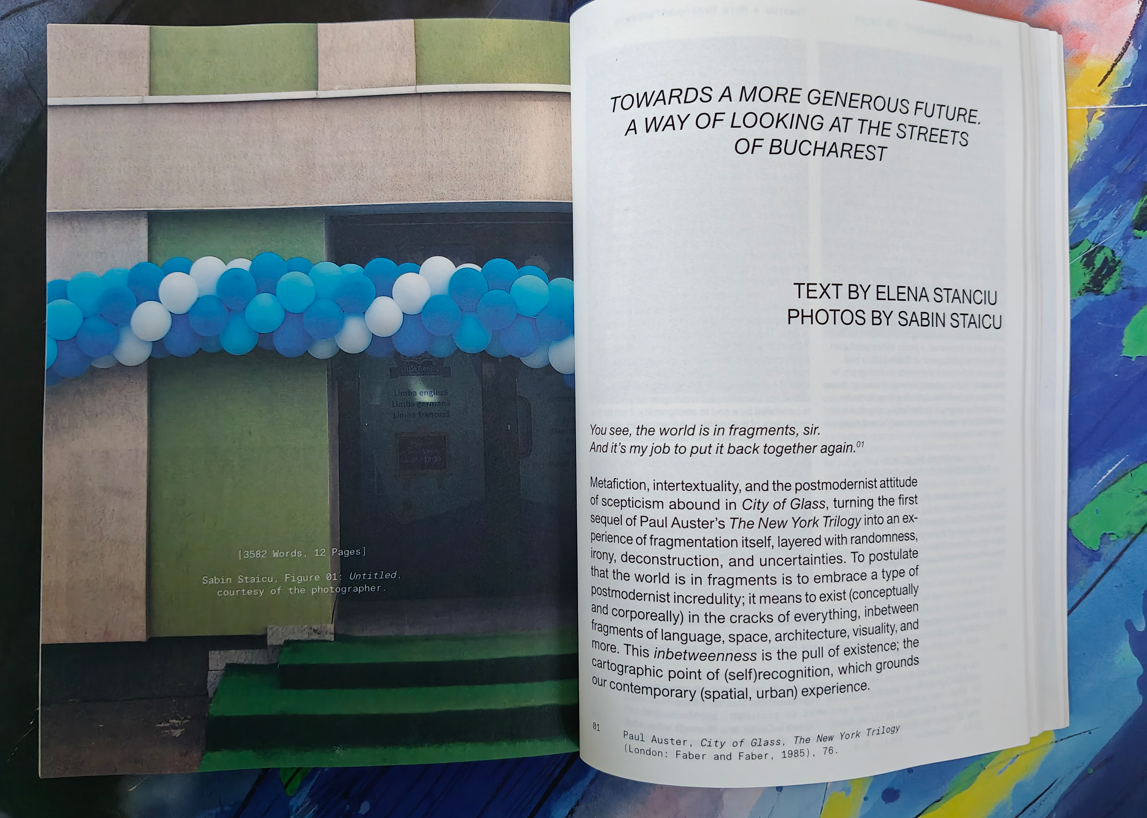


Towards a More Generous Future: A Way of Looking at the Streets of Bucharest
“You see, the world is in fragments, sir. And it’s my job to put it back together again.” Paul Auster, City of Glass
Metafiction, intertextuality, and the postmodernist attitude of scepticism abound in City of Glass, turning the work into an experience of fragmentation itself, layered with randomness, irony, deconstruction, and uncertainties. To postulate the world is in fragments is to embrace a type of postmodernist incredulity; to exist (conceptually and corporeally) in the cracks of everything, in between fragments of language, space, architecture, visuality, and more. This in-betweenness is the pull of existence; the cartographic point of (self)recognition, which grounds our contemporary (spatial, urban) experience.
What can we make of this today, especially in an Eastern European context? Is the world in fragments (here more than anywhere else?), and whose job is it to put it back together again? Better yet – should the world be put “back” together, or perhaps pushed into new forms and understandings of its own unity? What will the future look like, if we “rebuild” the world, not towards its former, pre-fragmented shape, but rather towards a more adaptable, pliable; a more understanding and understandable version of itself?
A reckoning with visual culture would be a first step in imagining and redesigning the future. It’s worth noting that visuality still has primacy in mediating our relationship with the world2. The ease and ubiquity of archiving past and present largely with visual methods connects us to a perception of the future in visual terms. As we today live the future(s) imagined in the past, there’s no doubt these attempts at futurism can fail. Then – might we become better “futurists,” through a more honest and generous engagement with visual culture?
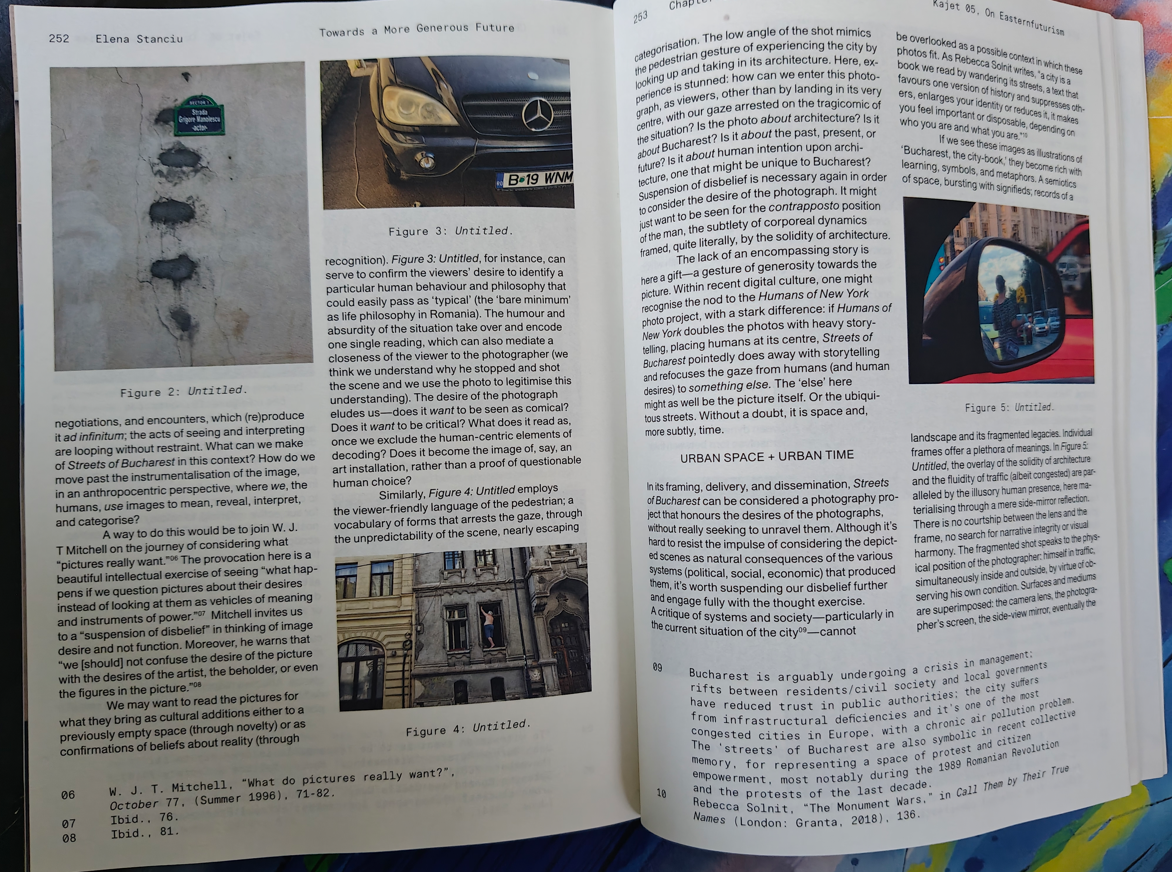
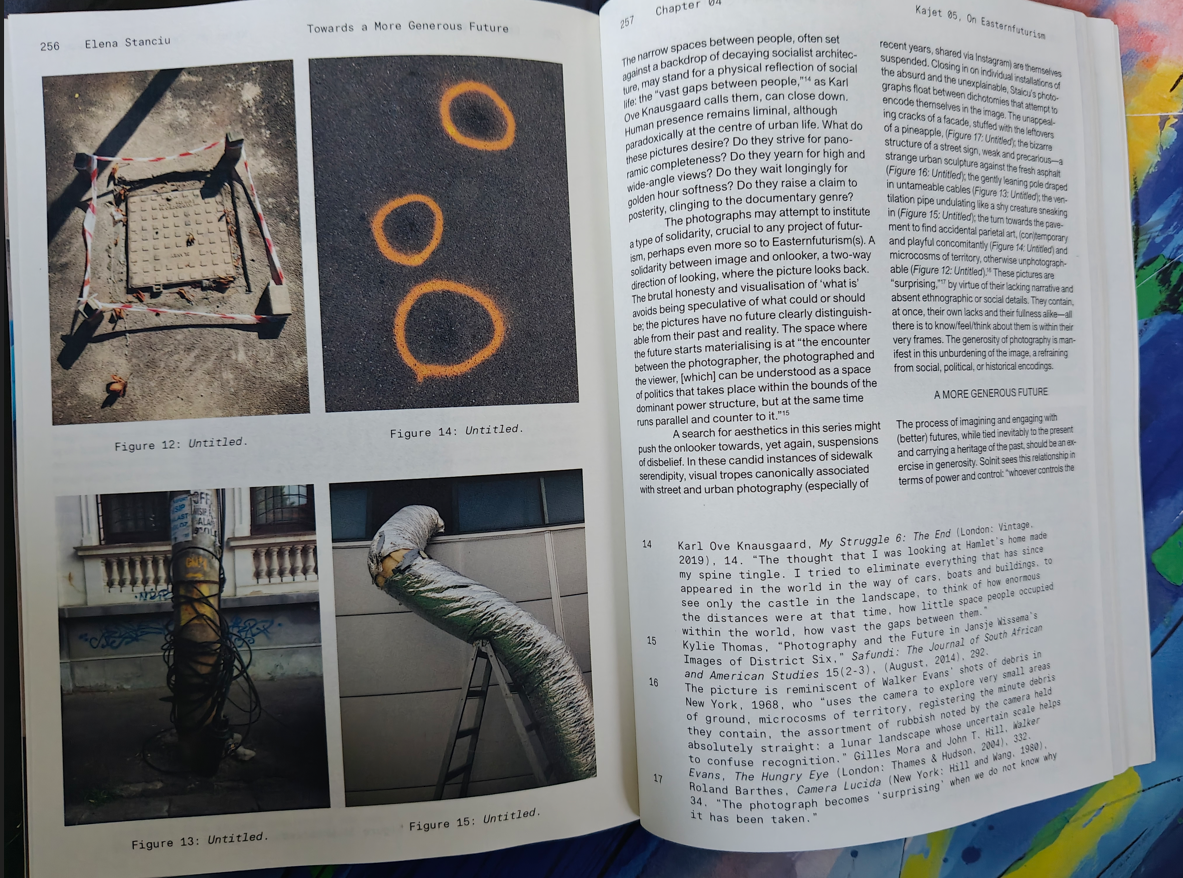
In answering this, I chose to look at “#streets of #bucharest,” a photo series produced by Sabin Staicu and shared in individual instalments on Instagram. In this essay, I’ll share a possible “way of seeing” these photographs, with the claim that they illustrate a mode of engaging with the future, anchored in a more generous and honest relationship with the present. (...)